The Surprising Benefits of Chewing Sugar-Free Gum
January 24, 2024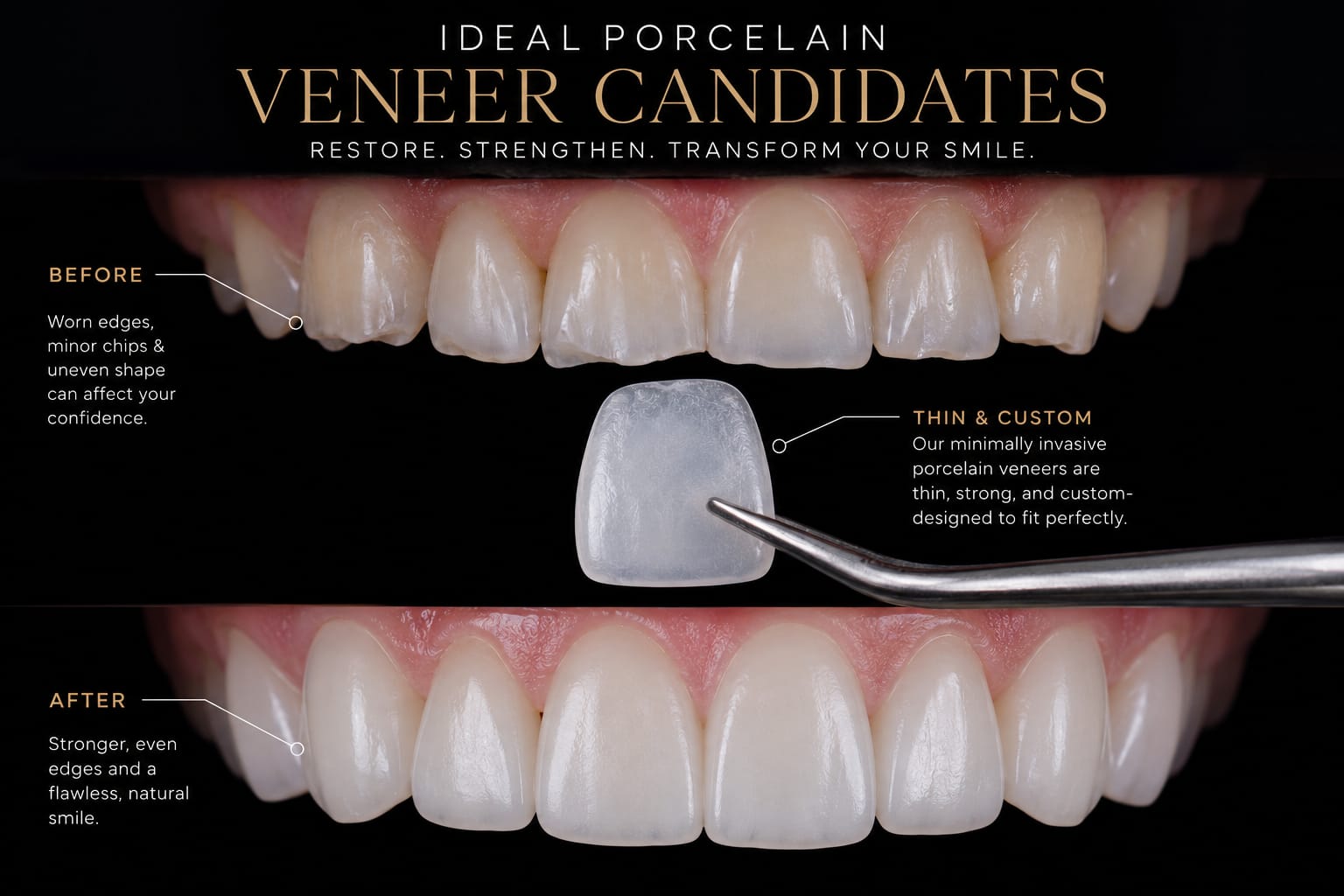
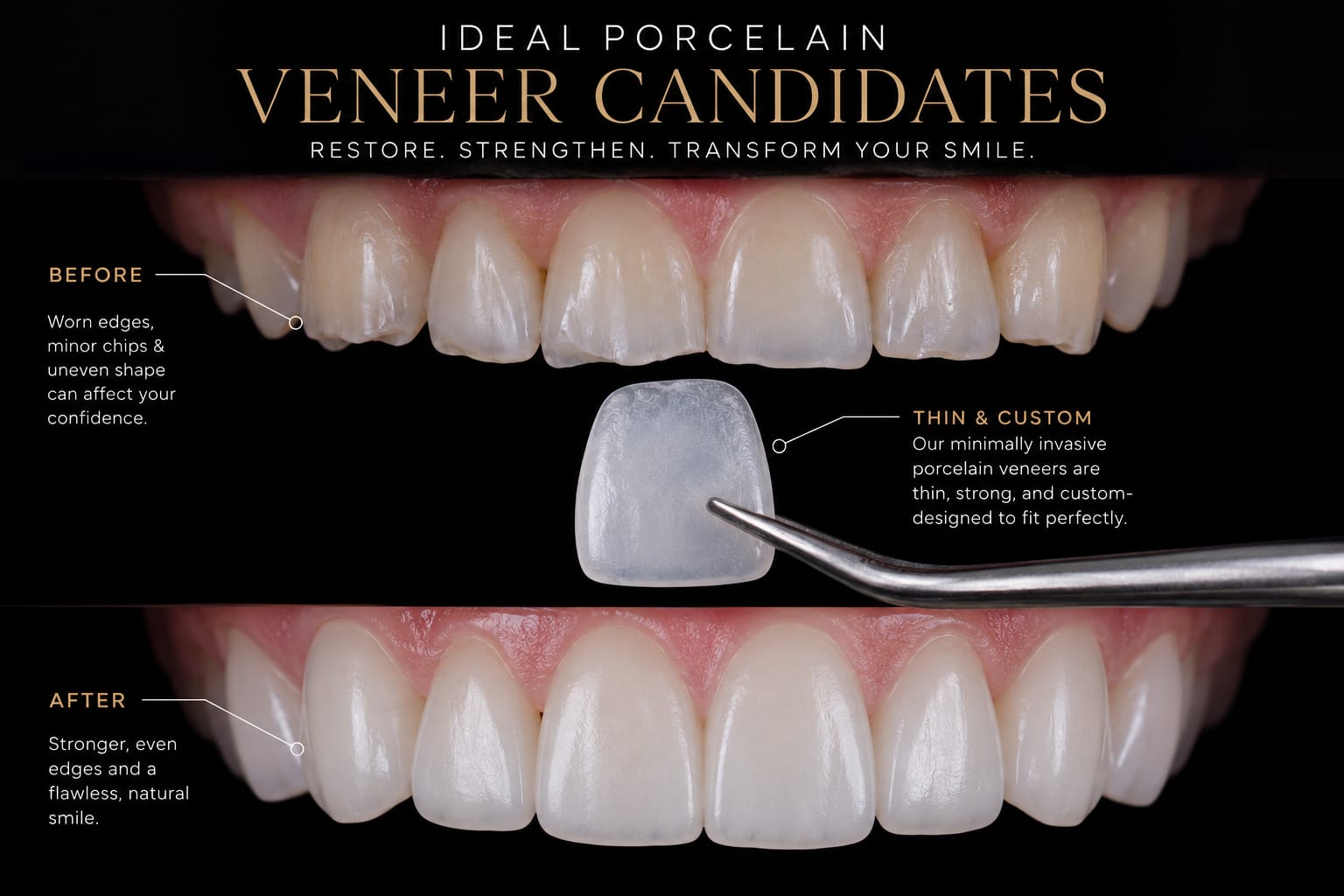
Ideal Porcelain Veneer Candidates
July 5, 2026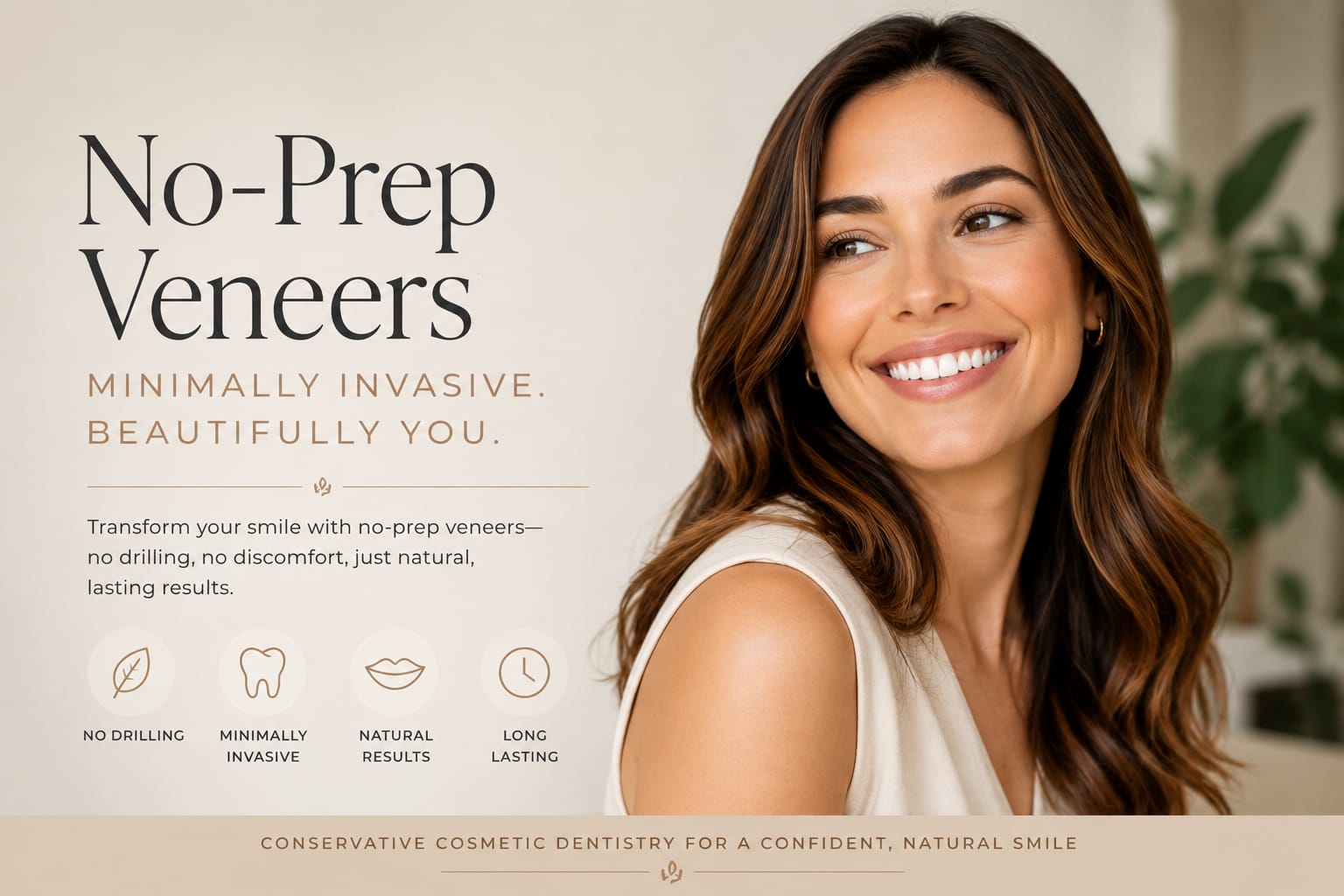
No-Prep Veneers: How Minimally Invasive Dentistry Preserves Enamel While Transforming Your Smile
For many years, traditional veneers were considered the gold standard for creating a brighter, more symmetrical smile. While they can produce beautiful results, conventional veneers typically require removing a small amount of enamel from the front of the teeth to make room for the porcelain restorations. Today, advances in dental materials and techniques have introduced a more conservative option: no-prep veneers.
No-prep veneers are part of a growing movement in dentistry known as minimally invasive dentistry—an approach focused on preserving as much natural tooth structure as possible while still achieving excellent aesthetic results.
What Are No-Prep Veneers?
No-prep veneers are ultra-thin porcelain shells that are bonded to the front surfaces of the teeth without—or with very minimal—removal of enamel. Because these veneers are extremely thin, often similar in thickness to a contact lens, dentists can enhance the appearance of teeth while keeping the natural tooth structure largely intact.
This approach allows patients to improve the color, shape, and overall harmony of their smile without the more aggressive preparation that traditional veneers sometimes require.
Why Preserving Enamel Matters
Enamel is the hardest substance in the human body, but once it is removed, it cannot regenerate. Preserving enamel is one of the most important goals in modern dentistry because it protects the underlying tooth and contributes to long-term oral health.
Minimally invasive treatments like no-prep veneers offer several benefits:
- Maintaining natural tooth strength
- Reducing tooth sensitivity
- Lowering the risk of complications
- Providing more conservative treatment options
By avoiding unnecessary drilling, dentists can achieve cosmetic improvements while maintaining the integrity of the natural tooth.
Achieving a Whiter, More Balanced Smile
One of the most common reasons patients seek veneers is to improve the color of their teeth. Stains caused by genetics, medications, or deep discoloration may not respond well to whitening treatments. No-prep veneers can mask these stains and create a naturally bright smile that still looks realistic.
In addition to whitening the smile, no-prep veneers can also improve the shape and proportions of teeth, addressing concerns such as:
- Small or undersized teeth
- Minor spacing or gaps
- Uneven edges
- Worn or slightly chipped teeth
- Irregular tooth shapes
By subtly reshaping teeth and creating consistent proportions, veneers can dramatically enhance overall smile aesthetics.
When Some Preparation May Be Necessary
Although many patients can benefit from a true no-prep veneer approach, every smile is unique. In certain situations, a small amount of preparation near the gum line may be recommended. This allows the porcelain veneer to blend seamlessly with the natural tooth and helps hide the interface between the veneer and enamel.
Carefully shaping this margin can also allow for a better seal between the porcelain and the tooth, which supports long-term durability and aesthetics. For this reason, some patients receive minimal-prep veneers rather than completely no-prep veneers.
The goal remains the same: remove as little natural tooth structure as possible while still achieving the most natural-looking and long-lasting result.
Natural-Looking Results
Modern dental ceramics are designed to mimic the translucency and light reflection of natural enamel. This allows dentists to create veneers that blend seamlessly with surrounding teeth. When designed carefully, no-prep veneers enhance the smile while still preserving a natural appearance—avoiding the overly opaque or bulky look that people sometimes associate with cosmetic dentistry.
Personalized Care and Attention to Detail
At the heart of successful cosmetic dentistry is careful planning and an eye for detail. Dr. Balaes performs no-prep and minimally invasive veneer procedures with a strong focus on preserving natural tooth structure while delivering beautiful, natural-looking results.
His patients often appreciate his meticulous attention to detail and his commitment to designing smiles that complement each person’s unique facial features. By carefully evaluating each case, Dr. Balaes determines whether a true no-prep approach or a minimal-prep technique will provide the best outcome.
Who Is a Good Candidate?
No-prep veneers are not appropriate for every situation. The best candidates typically have:
- Healthy teeth and gums
- Mild spacing or shape concerns
- Smaller teeth that benefit from added volume
- A desire for cosmetic improvement without extensive tooth preparation
Patients with significant crowding, severe discoloration, or large restorations may still require traditional veneers or other treatments.
The Future of Conservative Cosmetic Dentistry
The goal of modern dentistry is no longer simply to repair teeth—it is to enhance smiles while protecting natural structures for the long term. No-prep veneers represent a shift toward more conservative, patient-focused care.
For patients seeking a whiter, more balanced smile, minimally invasive veneer techniques can provide stunning aesthetic improvements while preserving the most valuable resource in dentistry: your natural enamel.
A consultation with Dr. Balaes can help determine whether no-prep or minimally prepared veneers are the right solution to achieve a brighter, more confident smile.