

Preventive care · Staten Island, NY
Dental Cleanings with Guided Biofilm Therapy in Staten Island
A fresh, clean smile starts with care that feels personal. At Remedy Dentistry, we use Guided Biofilm Therapy and AIRFLOW® technology to remove plaque and surface stains, with your comfort at the center of your visit.

Guided Biofilm Therapy at Remedy Dentistry
Understand your cleaning
What is Guided Biofilm Therapy?
Biofilm is the sticky layer of bacteria that builds up on your teeth and along your gums. You may know it as plaque. Daily brushing and flossing help control it, while professional care addresses buildup and areas that need extra attention.
Guided Biofilm Therapy, or GBT, makes plaque visible with a temporary coloring solution. We then use AIRFLOW—a controlled combination of air, warm water, and fine powder—to remove biofilm and surface stains. Any remaining hardened tartar is removed with appropriate instruments.
The result is a targeted approach to cleaning, with practical guidance to help you care for your smile at home.
Small details. A different experience.
A cleaning with your comfort in mind.
01 / COMFORT
Tell us what you feel.
Sensitive teeth or nerves about your visit? Let us know. We can adjust your care, explain each step, and take breaks when you need them.
02 / SURFACE STAINS
Refresh your natural smile.
AIRFLOW helps lift surface stains from everyday habits such as drinking coffee or tea. Your teeth may look brighter afterward; stain removal does not change their underlying shade.
03 / PERSONALIZED CARE
See where to focus.
Visible plaque gives us a shared starting point. We can show you the areas that need attention and help make your brushing and flossing routine more effective.
Before & after
A closer look at professional cleaning.
Explore before-and-after examples of professional cleaning, including the removal of visible buildup and surface stains.
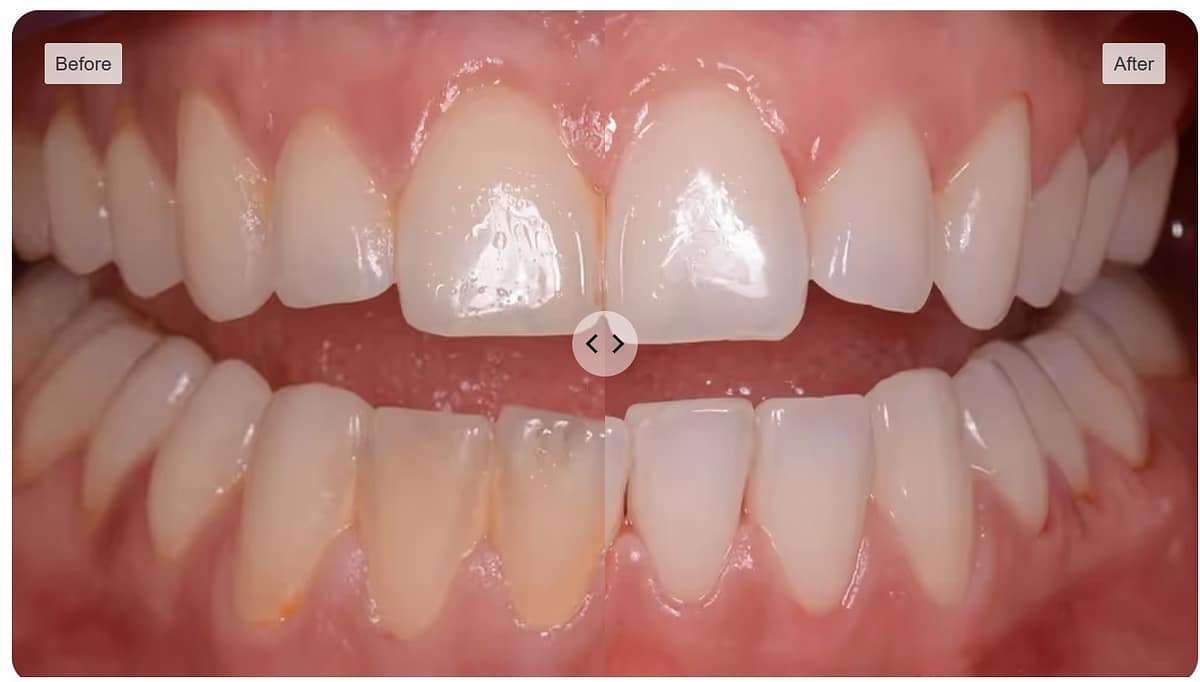
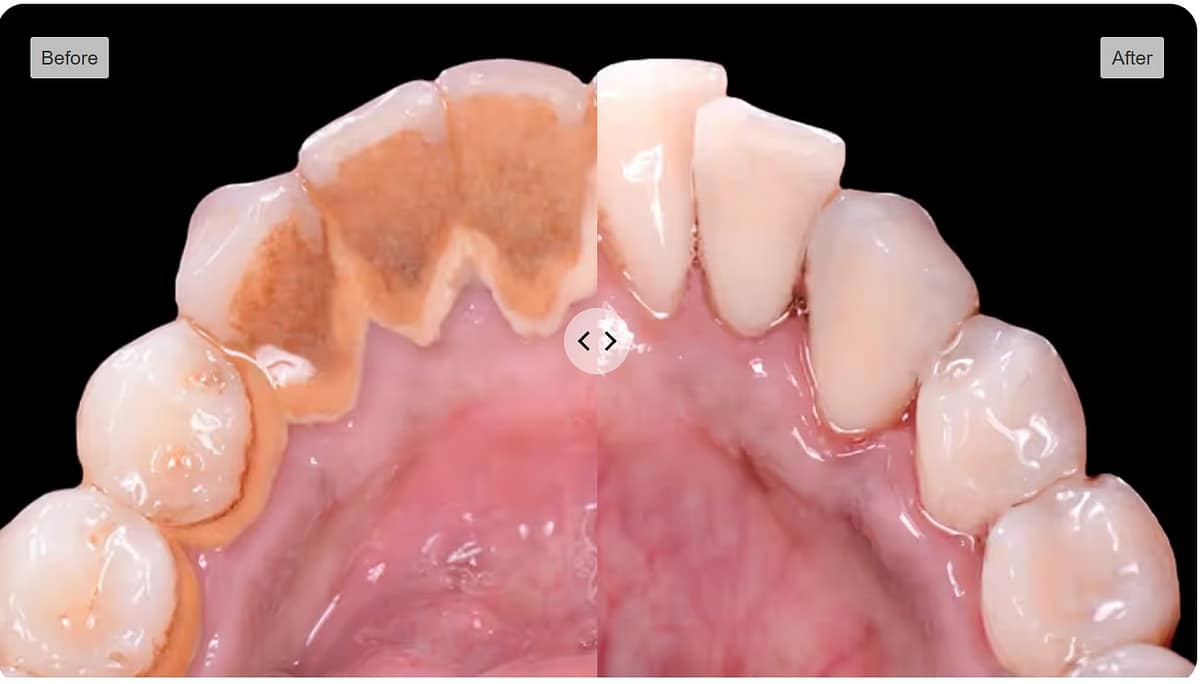
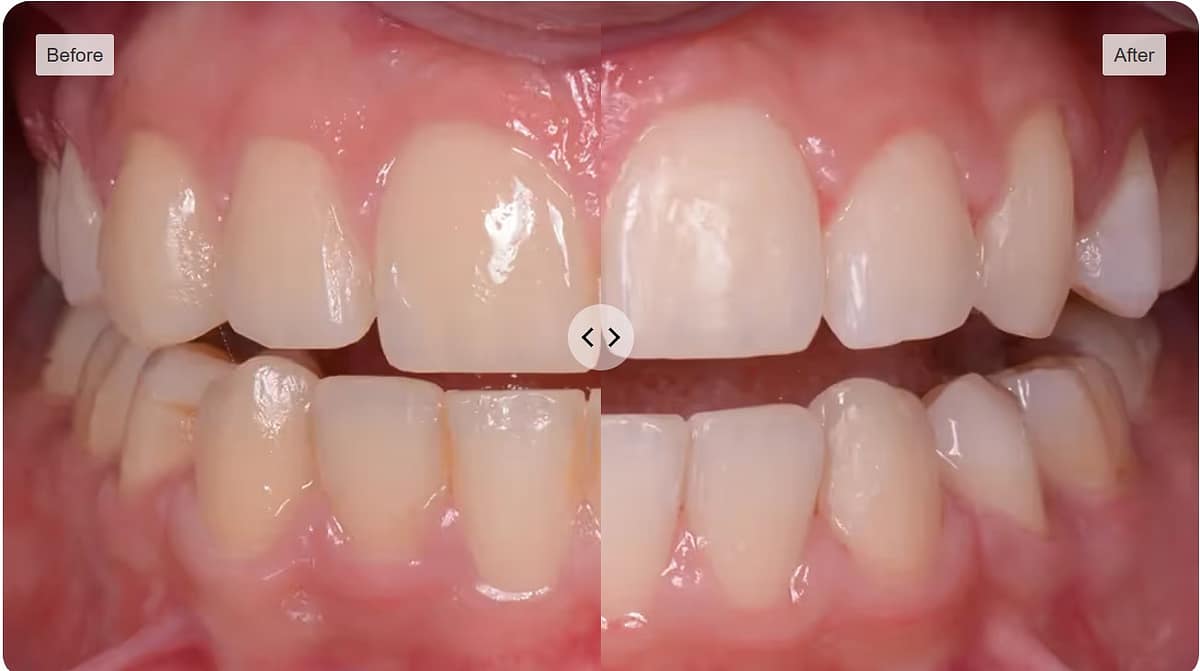
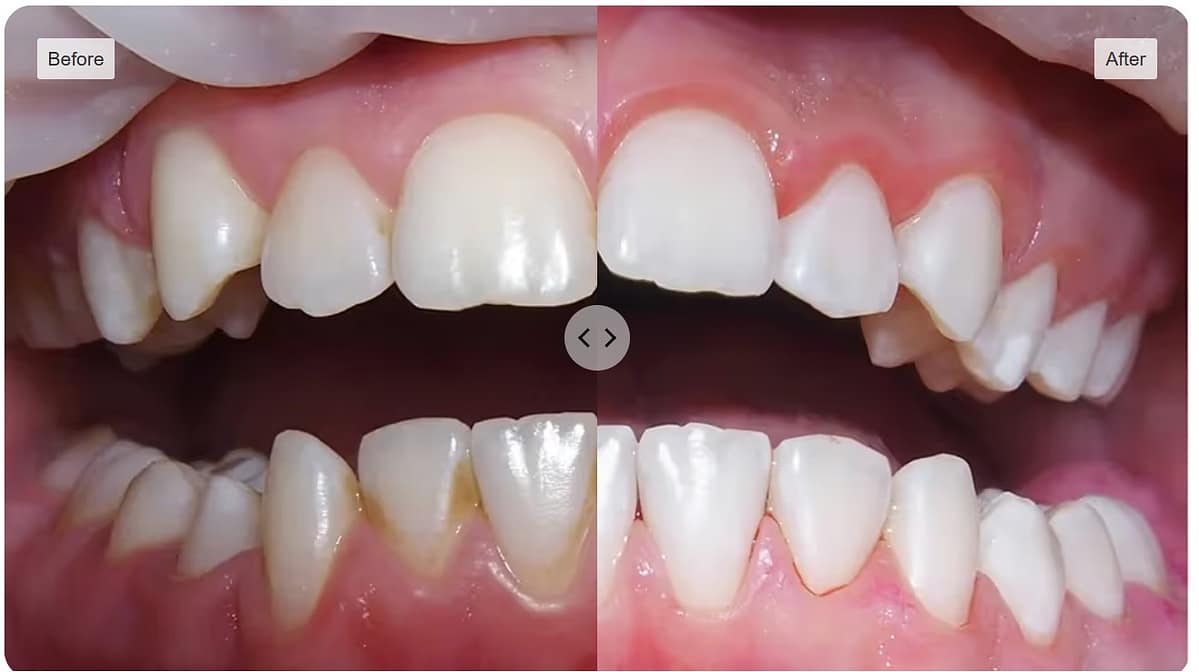
Illustrative treatment examples. Individual results vary.
Your visit, explained
What happens during your cleaning?
We tailor the appointment to your oral health. Here is a simple overview of the process.
Assess & discuss
We review your health history, discuss sensitivity or concerns, and evaluate your teeth and gums to identify the care you need.
Make plaque visible
A temporary disclosing solution highlights biofilm and helps us show you areas that are easy to miss at home.
Clean with care
AIRFLOW removes biofilm and surface stains. We use ultrasonic or hand instruments where needed to remove remaining hardened tartar.
Check & plan ahead
We check the cleaned areas, review home care, and recommend when to return based on your individual needs.
Your appointment may also include a dental examination, oral cancer screening, and X-rays when clinically indicated. We will explain any additional findings and recommendations.
Care for your whole smile
For natural teeth.
And the smile you have invested in.
Veneers, crowns, bonding, and implants all need ongoing care. We select suitable powders and instruments for your teeth and restorations, with attention to the surrounding gums.
Whether you are maintaining your natural smile or caring for cosmetic dental work, your hygiene visits are part of the plan.
Before you book
Your cleaning questions, answered.
Is Guided Biofilm Therapy comfortable?
AIRFLOW uses warm water and fine powder, and the approach is designed with comfort in mind. Sensitivity varies from person to person. Tell us about tender gums, sensitive teeth, or dental anxiety so we can adapt your visit.
Will I still need scaling?
Possibly. AIRFLOW removes biofilm and surface stains, but remaining hardened tartar requires appropriate instruments. Your cleaning may include ultrasonic or hand scaling where needed.
Is this the same as teeth whitening?
No. Removing surface stains can reveal more of your teeth’s natural brightness. Whitening treatment changes tooth shade and is a separate service.
How often should I have a cleaning?
Your schedule depends on your gum health, cavity risk, medical history, and home care. Some patients need visits twice a year; others need more frequent care, especially after treatment for gum disease. We will recommend an interval for you.
What if my gums bleed?
Bleeding deserves an evaluation. Let us know when it happens and whether you have tenderness or swelling. We will assess your gums and discuss whether preventive cleaning or periodontal treatment is appropriate.
What does it cost, and does insurance cover it?
Fees and benefits depend on the services you need and your individual plan. Contact our team to review the proposed care, estimated cost, and insurance details before your appointment.
Can I book online?
Yes. Use the scheduling button to view available appointments. If you have a history of gum disease or are unsure which visit to select, call us so we can help you book the appropriate appointment.
Make time for your smile
Your next fresh start is a cleaning away.
Schedule your dental cleaning at Remedy Dentistry in Staten Island. We will help you understand your oral health and plan care around your smile.