
Restorative dentistry · Staten Island, NY
Porcelain Crowns & Dental Bridges in Staten Island
All-Porcelain Restorations • Natural-Looking Results
Restore damaged, weakened, or missing teeth with modern porcelain crowns and dental bridges designed for strength, function, fit, and a natural-looking appearance.
At Remedy Dentistry, Dr. Gregory J. Balaes, DMD plans restorative care around your remaining tooth structure, bite, and smile—not a one-size-fits-all tooth shape.
Start with the right restoration
Repair a tooth. Replace a missing tooth.
A crown restores an existing tooth; a bridge fills a gap left by missing teeth. A crown fits over a prepared tooth. A conventional bridge joins replacement teeth to crowns on supporting teeth. Both require an examination to assess the teeth, gums, bite, and long-term support.
Porcelain crowns
A crown, sometimes called a dental cap, covers a tooth that needs more support than a filling can provide. It can restore the tooth’s shape and chewing surface while coordinating with nearby teeth.
A crown may be considered for:
- A broken or heavily restored tooth
- Extensive decay that leaves limited tooth structure
- Selected cracked or worn teeth that remain restorable
- A tooth needing protection after root canal treatment
When less coverage is appropriate, a filling, inlay, onlay, or bonding may preserve more healthy tooth.
Dental bridges
A fixed bridge replaces one or more missing teeth. The replacement tooth, called a pontic, is connected to supporting restorations. A traditional bridge relies on neighboring teeth; some bridges are supported by dental implants.
Bridge planning considers:
- The location and length of the gap
- The health and strength of the supporting teeth
- Gum health, bite forces, and space for the restoration
- Access for cleaning beneath the replacement tooth
We discuss whether a bridge, an implant-based option, or a removable partial denture suits your needs.
Beyond choosing a shade
What makes a porcelain restoration look natural?
A restoration should belong in your smile. Its shape, brightness, light transmission, and relationship to the gumline all contribute to that result.
Appearance in context
We consider the neighboring teeth, smile line, and proportions visible when you speak and smile. The aim is a thoughtful match, whether you need one crown or coordinated restorative treatment.
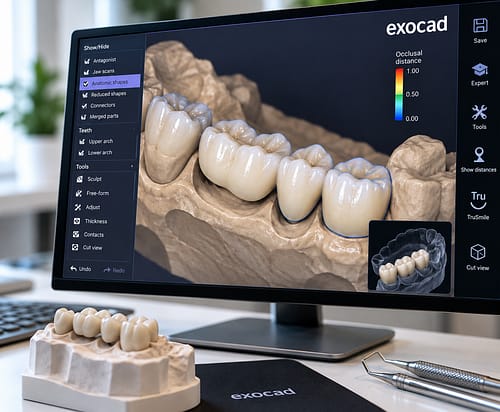
Digital scans and planning help document tooth form and communicate the proposed restoration. For suitable smile-design cases, a 3D plan and trial smile may help you discuss changes before the final restorations are made.
Material, fit, and function
All-porcelain restorations are part of the wider family of all-ceramic options. Ceramic materials differ in translucency and mechanical properties, so the choice depends on the tooth’s position, available space, bite, and restoration design.
These restorations have no metal substructure. For implant-supported treatment, the implant or connecting component may still contain metal. We can explain the materials proposed for your specific plan.
A trial smile is a prototype and may differ from the final restoration. Suitability is assessed individually.
Understand your options
Crowns, veneers, or a bridge?
| Treatment | Main purpose | A key consideration |
|---|---|---|
| Porcelain crown | Restore and cover a damaged existing tooth | Usually requires preparation around most of the visible tooth |
| Porcelain veneer | Improve the visible surface of a suitable tooth | Requires enough healthy tooth structure and a suitable bite |
| Composite bonding | Repair selected chips or refine tooth shape | May be suitable when full coverage is unnecessary |
| Dental bridge | Replace one or more missing teeth | Needs reliable tooth or implant support and daily cleaning access |
You do not need to choose a procedure before your consultation. The examination helps identify the appropriate level of treatment.
From diagnosis to final fit
Your crown or bridge treatment at Remedy
Understand the tooth and your goals
We assess tooth structure, gum health, and your bite, with imaging when indicated. Discuss discomfort, an older restoration, a missing tooth, or an appearance you would like to change.
Choose the restoration and shade
We explain the proposed material, alternatives, and treatment sequence. Digital records support planning; visible front teeth may need additional attention to symmetry and shade.
Create space and capture the fit
The tooth is prepared with local anesthetic as appropriate. Scans or impressions record its shape. A temporary restoration may protect the prepared tooth while the final crown or bridge is made.
Check the bite and appearance
Before final placement, we evaluate fit, contacts, bite, and appearance. The restoration is bonded or cemented as indicated, and we review cleaning and follow-up care.
Many cases involve a preparation visit and a separate placement visit. Additional treatment or healing can change the schedule; your timeline is discussed after the examination.
A clear plan before treatment
How much do crowns and bridges cost in Staten Island?
Your estimate depends on the number of teeth involved, restoration material, complexity, and any foundation work needed before placement. A bridge commonly involves several connected units, so its fee is not directly comparable with a single crown.
Ask our team for an individualized treatment estimate and help understanding any applicable insurance benefits. Coverage, limits, and patient responsibility depend on your plan.
Contact Remedy Dentistry to discuss your visit →Protect the foundation
Caring for your porcelain crown or bridge
The ceramic itself cannot develop a cavity, but the supporting natural teeth still can. Gum health and daily cleaning remain essential.
- Brush twice daily with fluoride toothpaste and clean between your teeth each day.
- For a bridge, use the cleaning method demonstrated by your dental team, such as a floss threader or an appropriately sized interdental brush.
- Avoid chewing ice or using your teeth to open packaging.
- If you clench or grind, ask whether a protective appliance is appropriate.
- Keep your recommended dental cleaning and examination appointments.
Call if a restoration becomes loose, chips, or feels high when you bite. Persistent pain or swelling also warrants evaluation.
Answers before your appointment
Porcelain crowns & dental bridges: FAQs
What is the difference between a crown and a bridge?
A crown covers and restores an existing tooth. A bridge replaces a missing tooth or teeth with a connected restoration supported by neighboring teeth or implants. The appropriate option depends on whether a tooth can be restored and the condition of the supporting structures.
Are porcelain crowns the same as veneers?
No. A crown covers most of the visible tooth and is often recommended when the tooth needs structural support. A veneer mainly covers the front surface. For a healthy tooth with a cosmetic concern, bonding or a veneer may be a more conservative option.
Will my crown or bridge look like my natural teeth?
The goal is to coordinate the restoration with your surrounding teeth and smile. Shade, translucency, shape, surface detail and gumline contours all matter. The underlying tooth color and available space can influence the final appearance.
Does getting a crown or bridge hurt?
Local anesthetic is typically used during tooth preparation. Some temporary sensitivity or gum tenderness can occur afterward. Contact the office if pain persists, swelling develops, or the bite feels uneven.
Does every tooth that needs a crown also need a root canal?
No. A crown and a root canal treat different problems. Root canal treatment is considered when the pulp inside a tooth is inflamed or infected; a crown restores the outer tooth. The examination determines whether one or both are needed.
How long do porcelain crowns and dental bridges last?
They can serve for many years, but they are not lifetime restorations. Longevity varies with material, bite forces, hygiene, decay risk and the health of the supporting teeth or implants. Chips, looseness or changes in the supporting teeth may require repair or replacement.
Can a bridge replace more than one missing tooth?
Sometimes. The number and position of missing teeth, bridge span, material and strength of the supporting teeth all affect suitability. An implant-supported restoration or removable partial denture may be considered for some gaps.
Can I whiten a porcelain crown or bridge?
Whitening treatments do not predictably lighten the ceramic itself. If you are considering whitening your natural teeth, discuss the timing before the final restoration shade is selected.
How do I schedule a crowns or bridges consultation in Staten Island?
Contact Remedy Dentistry at (718) 747-8711 or request an appointment online. The office is at 932 Woodrow Road, Staten Island, NY 10312. An examination is needed to recommend treatment and provide an individualized estimate.
Remedy Dentistry · 932 Woodrow Road
Restore comfort. Make your smile feel like you.
Visit Dr. Gregory J. Balaes at Remedy Dentistry to explore porcelain crowns and dental bridges in Staten Island. We’ll help you understand what can be restored, how the options differ, and what comes next.
932 Woodrow Road, Staten Island, NY 10312
(718) 747-8711 · smile@remedydentistry.com
Office details & directions · Meet Dr. Balaes · Explore all services
Patient education: American Dental Association: Crowns · ADA: Bridges · American College of Prosthodontists: Caps and Crowns · MedlinePlus: Dental Crowns · Australian Dental Association: Crowns, Bridges and Veneers.
General treatment information. An examination is required to determine suitability; results and restoration longevity vary.