

Before and After Guided Biofilm Therapy (GBT)
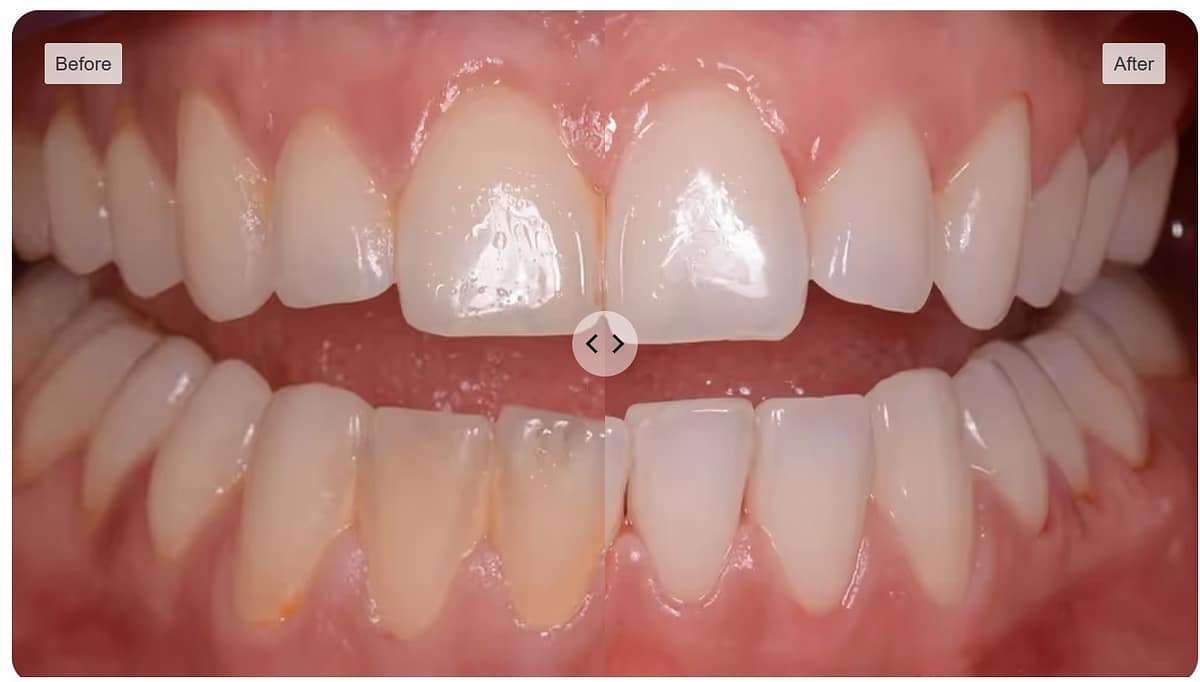
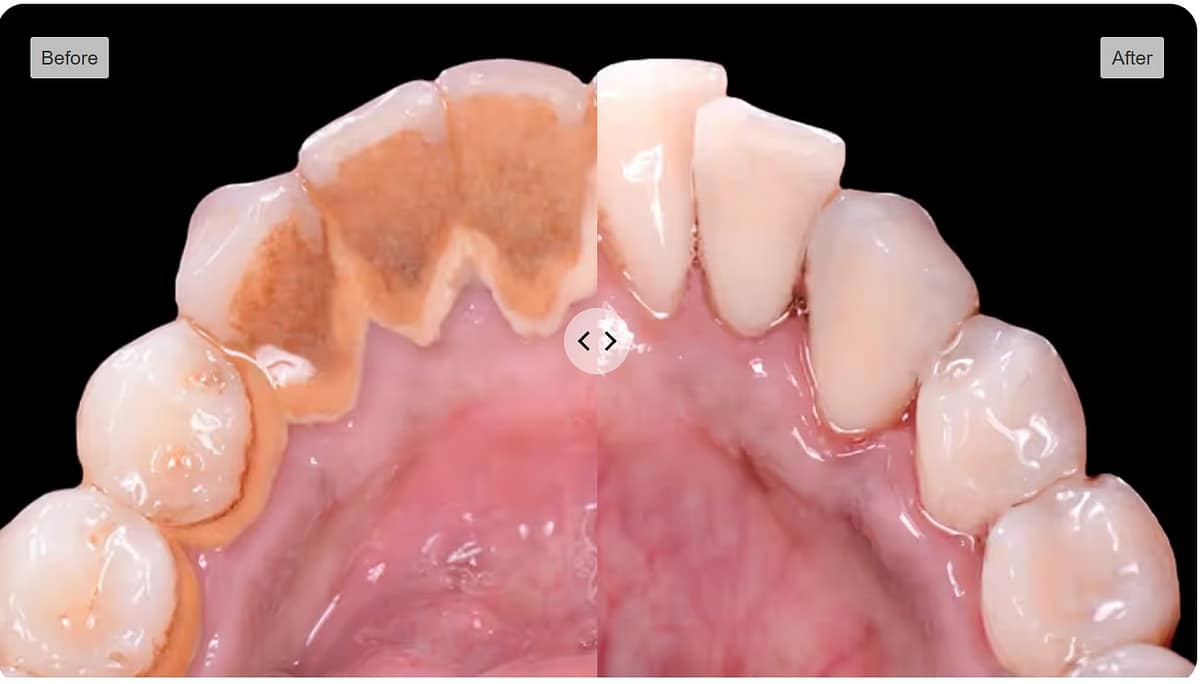
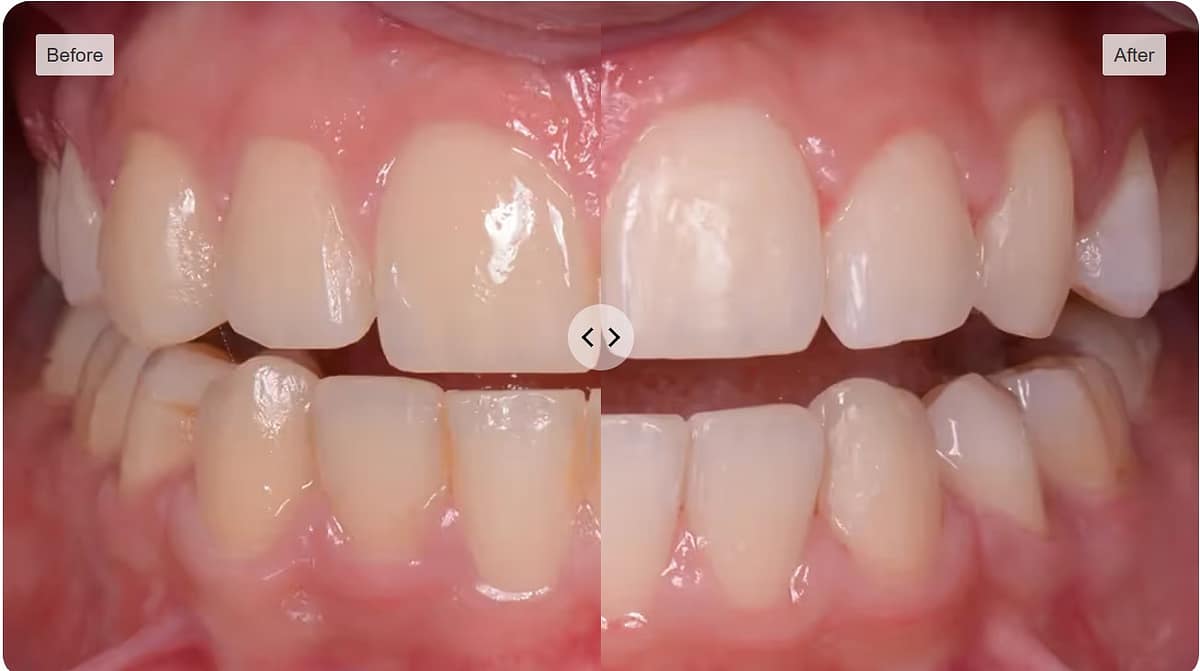
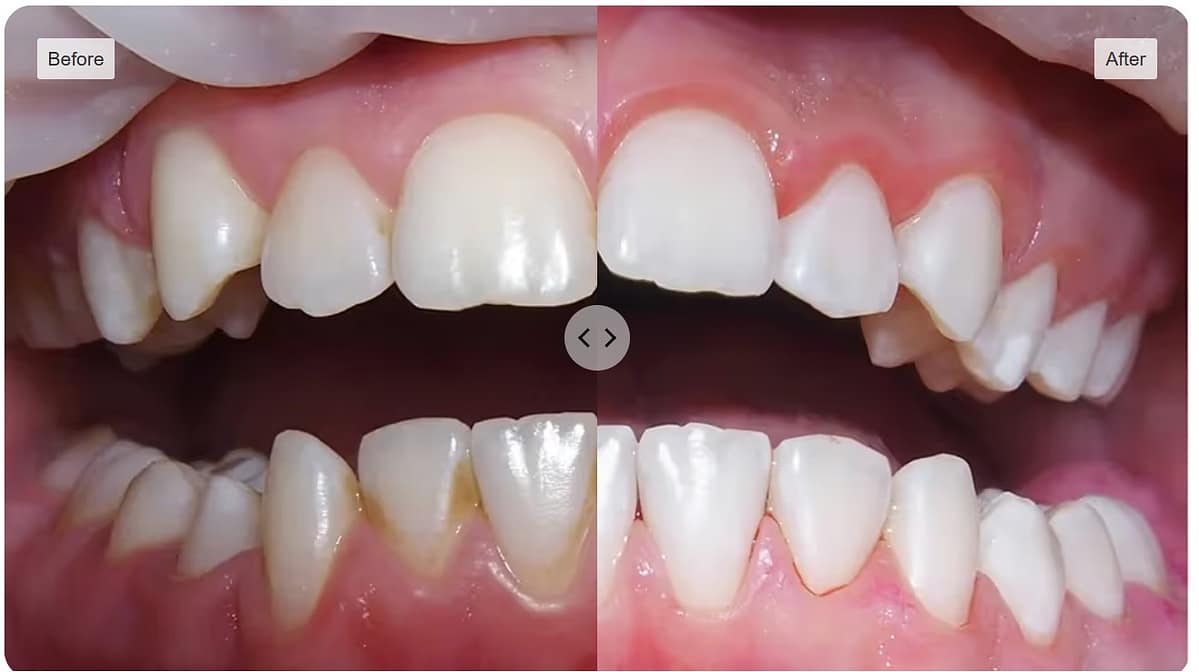
These examples illustrate the typical progression during Guided Biofilm Therapy:
- Before treatment: Biofilm (plaque) and stains are present on the tooth surfaces.
- After disclosing dye: A special dye highlights the bacterial biofilm so the clinician and patient can see exactly where plaque is located.
- Airflow cleaning: A stream of warm water, air, and fine powder removes the biofilm and stains.
- After treatment: Teeth appear cleaner, smoother, and brighter with the bacterial layer removed.
Dental biofilm is a thin layer of bacteria that forms naturally on teeth. If not removed regularly, it contributes to cavities, gum inflammation, and periodontal disease. Guided Biofilm Therapy is designed to remove this bacterial layer in a precise and minimally invasive way
How Guided Biofilm Therapy Works
Guided Biofilm Therapy follows a systematic protocol that targets bacterial biofilm first and removes calculus only where necessary.
1. Examination and Assessment
The dentist or hygienist first evaluates the teeth, gums, and implants to determine where biofilm and calculus may be present. This helps personalize the treatment.
2. Biofilm Disclosure (Visualization)
A harmless dye is applied to the teeth to stain bacterial plaque.
- Pink areas indicate newer plaque
- Blue areas indicate older biofilm buildup
This step makes the bacteria visible so the cleaning can be targeted precisely.
3. Airflow Biofilm Removal
The clinician uses an air-polishing handpiece that sprays:
- Warm water
- Air
- Ultra-fine erythritol powder
This combination gently removes plaque and stains from teeth, restorations, and even below the gumline.
4. Perioflow for Gum Pockets
If needed, a special nozzle called Perioflow cleans deeper gum pockets where bacteria accumulate in periodontal disease.
5. Targeted Calculus Removal
After biofilm is removed, hardened tartar becomes easier to identify. Ultrasonic instruments may then be used only where necessary, rather than scraping every tooth.
6. Final Check
The dentist or hygienist confirms that all plaque and calculus have been removed and reviews oral hygiene instructions with the patient.
Why GBT Produces a Better Cleaning
Guided Biofilm Therapy improves traditional cleanings because it focuses on the root cause of dental disease: bacteria.
Benefits include:
✔ More thorough removal of plaque and biofilm
✔ Reduced tooth sensitivity compared with traditional scraping
✔ Safe for veneers, implants, crowns, and orthodontics
✔ Removes surface stains for a brighter smile
✔ Minimally invasive and comfortable for patients
Because the biofilm is visually highlighted before cleaning, clinicians can ensure no areas of bacterial plaque are missed, making the cleaning more precise and effective.
Watch Guided Biofilm Therapy in Action
This video shows how the airflow technology removes plaque and stains using air, water, and powder while minimizing the need for scraping.

✅ Summary
Guided Biofilm Therapy represents a modern approach to preventive dentistry. By identifying and removing bacterial biofilm with airflow technology, dentists can provide a more comfortable and thorough cleaning while protecting enamel and reducing gum inflammation.
Plan Your Dental Cleaning in Staten Island
Learn about our professional dental cleanings and cavity prevention. For gum-care information, explore deep cleaning. Contact Remedy Dentistry to schedule a visit and discuss which cleaning is appropriate for you.
Questions to Discuss Before Your Visit
When you contact our Staten Island office, tell us whether you are booking a routine cleaning or have questions about gum care. You can ask how Guided Biofilm Therapy fits into your appointment, which areas need particular attention, and what your dentist or hygienist will review with you. If you have had treatment elsewhere, ask which records would be useful to bring.
For an overview from the equipment manufacturer, visit the EMS guide to Guided Biofilm Therapy. Bring any questions from that resource to your visit so our team can explain how the approach relates to your individual care plan.