
Dental Implant Hygiene
November 21, 2023Frequently Asked Veneer Questions
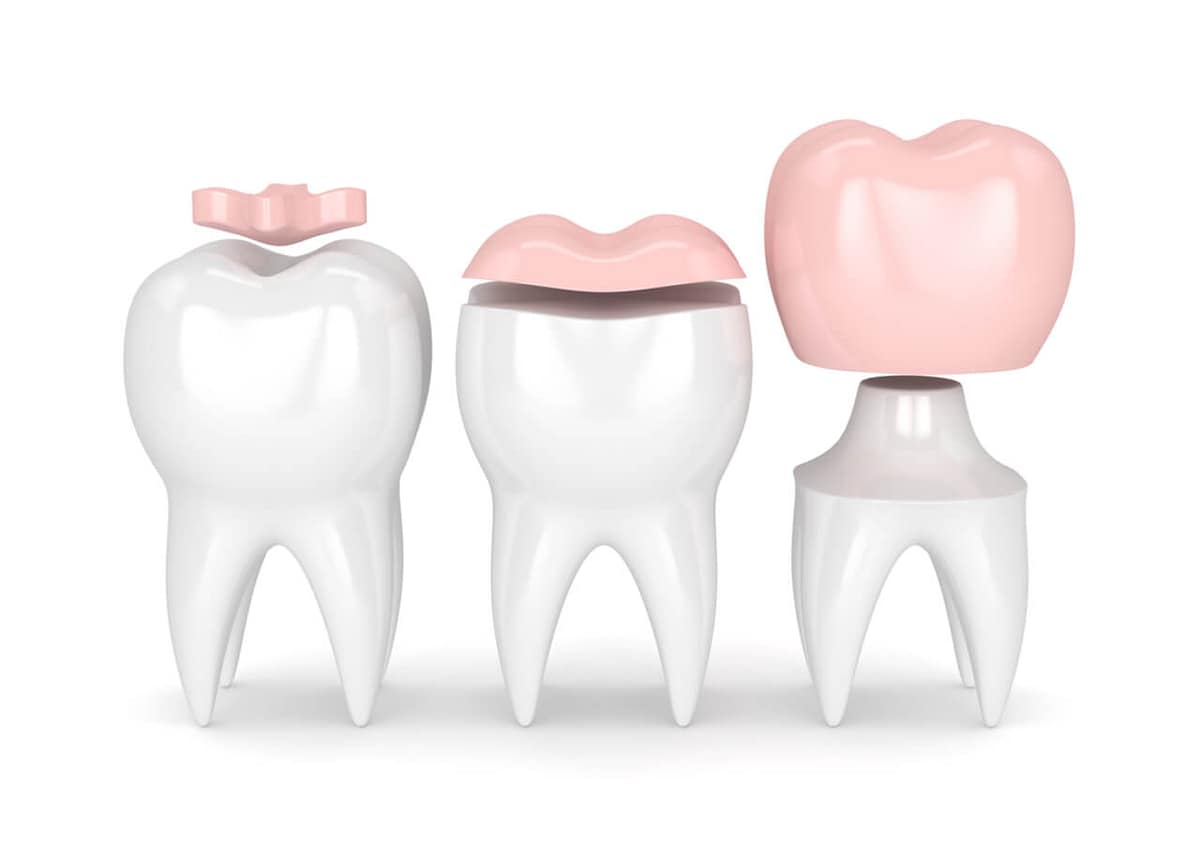
December 5, 2023Exploring numerous dental restorations, each designed to address particular issues and contribute to the durability of our teeth, is part of the route to good oral health. In the world of dental restorations, inlays, onlays, and crowns stand out as essential characters, each with their own role and set of qualities. Understanding the differences between these three procedures is critical for making educated dental care decisions. Join us as we dig into the realm of inlays, onlays, and crowns, unraveling the complexities that distinguish them and learning how they may play a transforming role in your oral health!
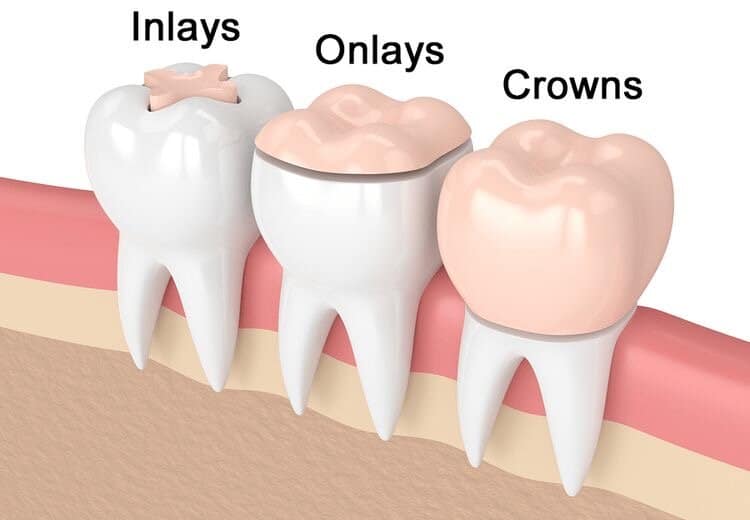
Material and Construction
Inlays
- Inlays are made of materials such as porcelain, composite resin, or gold.
- They are constructed to fit into a tooth’s indented upper surface.
Onlays
- Onlays, commonly known as partial crowns, cover a wider area of the tooth than inlays.
- They, like inlays, can be created of a variety of materials, such as porcelain, composite resin, or metal.
Crowns
- Crowns, also known as dental caps, cover the whole visible area of a tooth.
- Crowns are often made of porcelain, metal alloys, or a mix of the two.
Extent of Tooth Coverage
Inlays
- Only cover the central chewing surface (cusps) of a tooth.
- Ideal for correcting minor decay or damage inside the grooves of the tooth.
Onlays
- Cover a wider area of the tooth, including one or more cusps.
- Appropriate for more extensive deterioration or decay that extends past the cusps.
Crowns
- Provide complete covering by encasing the whole visible area of the tooth.
- Used in cases of serious injury, substantial decay, or following a root canal operation.
Application Process
Inlays
- Placed into the tooth structure after decay or damaged portions have been removed.
- Only a little percentage of good tooth structure is removed.
Onlays
- Applied similarly to inlays, but across a wider surface area.
- Retains more natural tooth structure than crowns.
Crowns
- Require extensive tooth reduction to accommodate the crown.
- Typically, two dental appointments are required: one for tooth preparation and another for crown implantation.
Strength and Durability
Inlays and Onlays
- Exhibit high strength, giving long-lasting solutions.
- Suitable for healing moderately damaged teeth.
Crowns
- Provide maximum strength and endurance.
- Suggested for severely damaged or weaker teeth.
Aesthetic Considerations
Inlays and Onlays
- For a more realistic appearance, they might be manufactured from tooth-colored materials.
- Blend in with the neighboring teeth.
Crowns
- Provide both strength and beauty.
- Often used to provide a good aesthetic appearance on front teeth.
Longevity and Maintenance
Inlays and Onlays
- Generally long-lasting, having a lifespan of 5 to 15 years or more.
- Regular oral hygiene habits, including brushing, flossing, and frequent dental check-ups, are required for maintenance.
Crowns
- Known for their endurance, and can last 10 to 15 years or more.
- To lengthen the lifespan of crowns, regular dental check-ups and strict oral hygiene are required.
Cost
Inlays and Onlays
- Tend to be cheaper than crowns
- Depending on the desired material and procedure complexity, the cost varies from person to person
Crowns
- Due of the extensive covering and materials needed, they tend to be more expensive.
- The cost of a crown might vary depending on the material used (such as porcelain, metal, or a mix).
Indications for Usage
Inlays
- Ideal for treating minor areas of decay or damage within the biting surface of the tooth.
Onlays
- Suitable for more significant damage that goes beyond the cusps but does not necessitate complete covering.
Crowns
- Recommended for severe decay, considerable injury, or following root canal therapy.
Dental Sensitivity
Inlays and Onlays
- Often linked with less post-operative sensitivity than crowns.
- Patients frequently report very minor pain during and after the treatment.
Crowns
- The preparation of the tooth for a crown may cause considerable irritation.
- This sensitivity is often transient and may be treated with over-the-counter pain relievers.
Reversibility
Inlays and Onlays
- Reversible to some extent because to the minimum destruction of tooth structure, allowing for future procedures.
Crowns
- Irreversible due to the removal of a considerable portion of tooth structure to accommodate the crown.