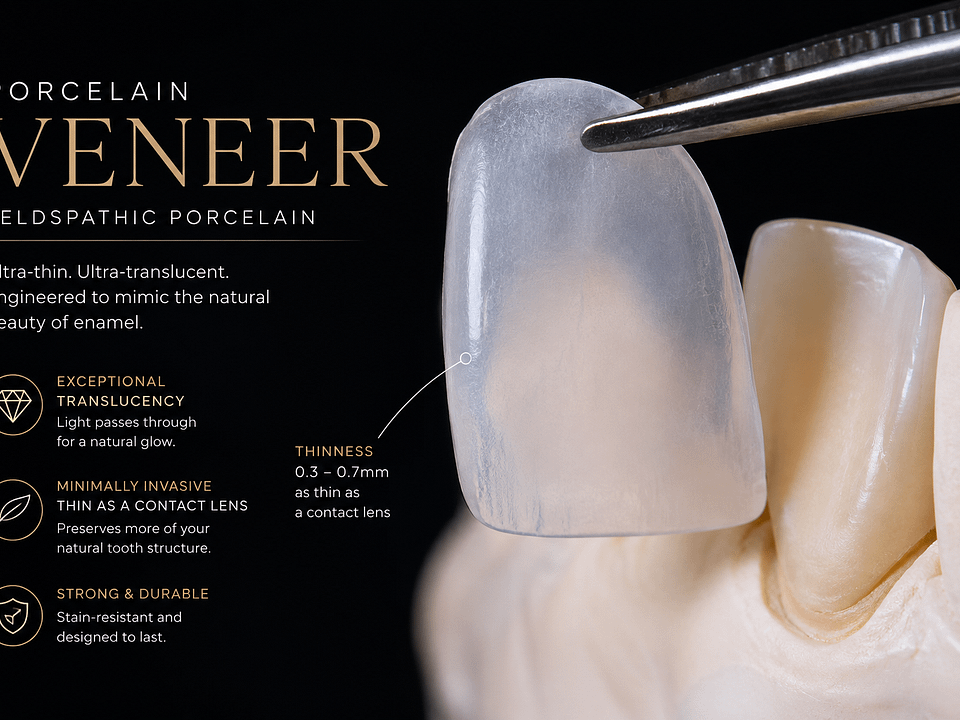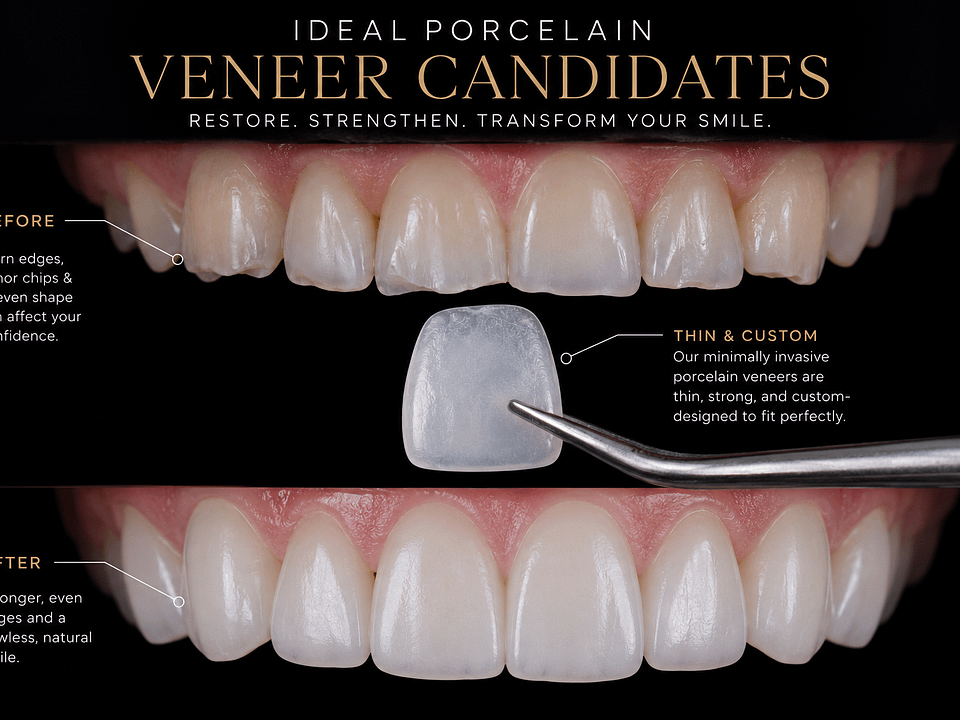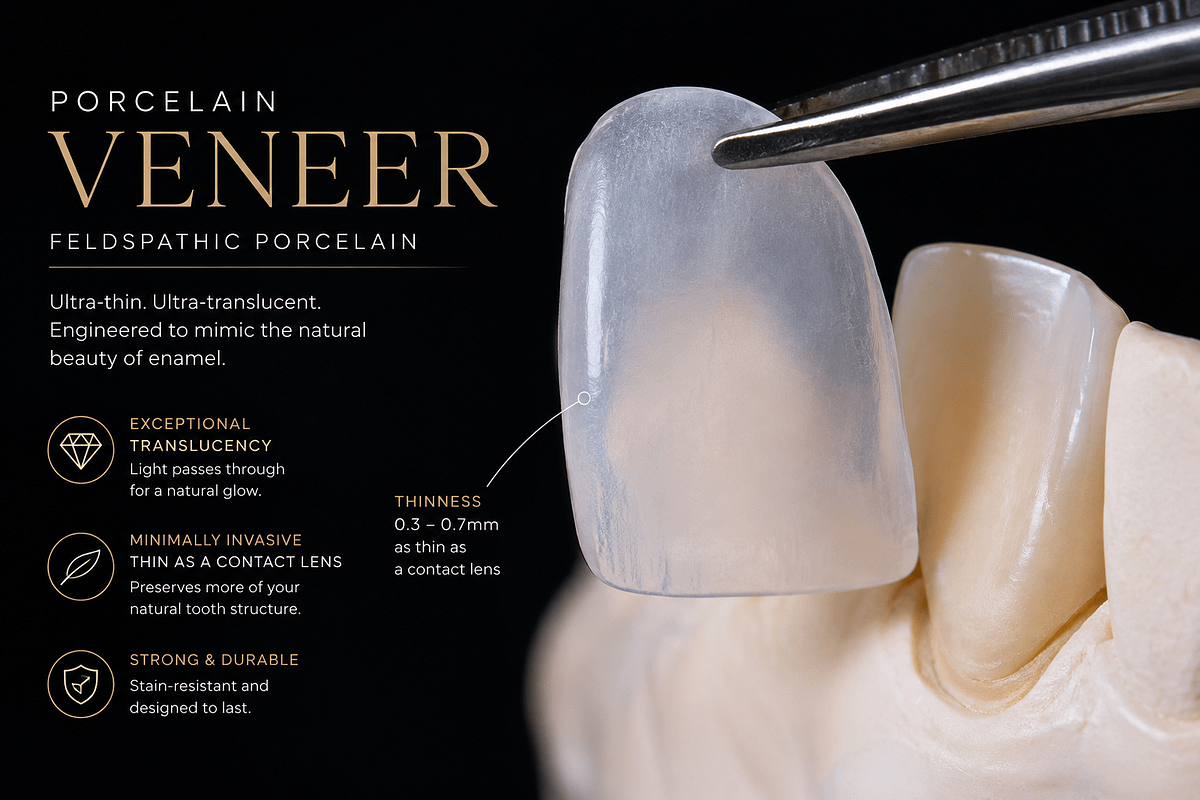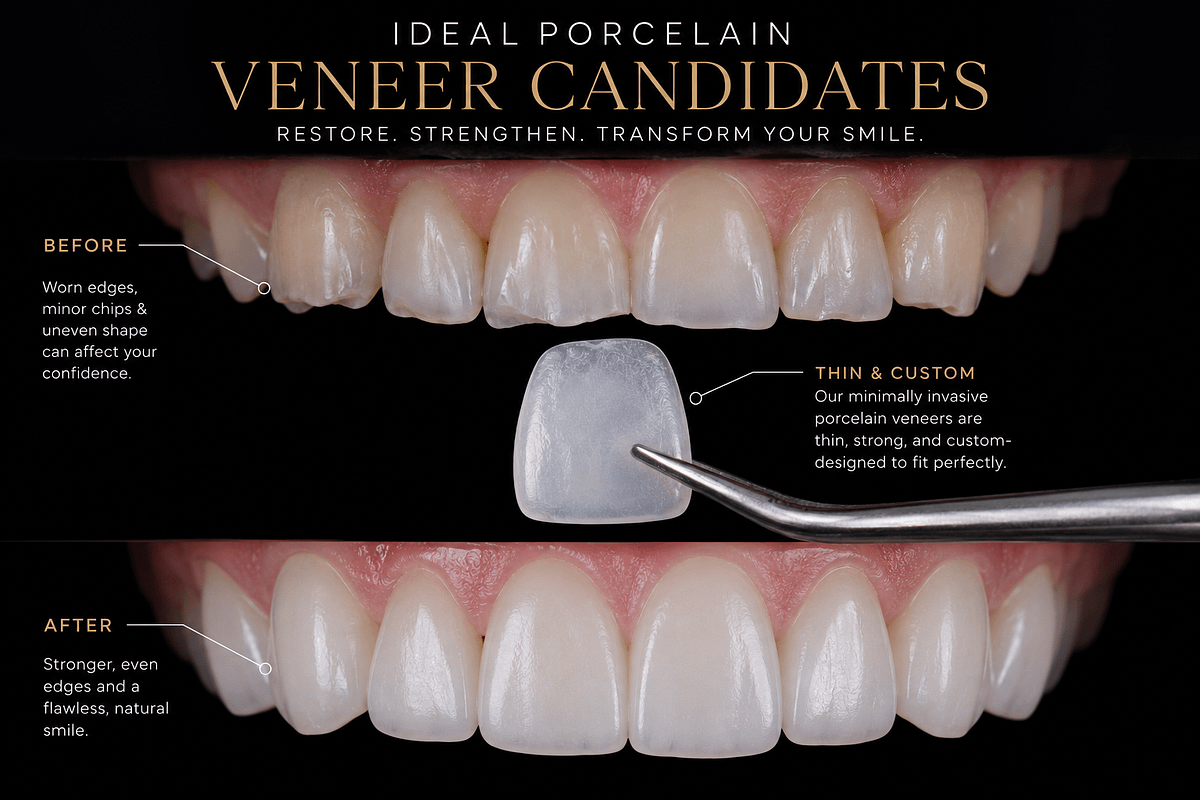
Feldspathic Veneers: The Details Behind a Natural Smile
November 15, 2026GBT AIRFLOW vs. Traditional Scaling: What’s the Difference?
November 15, 2026In brief: Composite bonding uses tooth-colored resin shaped directly on teeth; porcelain veneers use custom ceramic shells bonded to the visible surfaces. Bonding often suits smaller repairs and a lower initial budget. Porcelain generally resists stains and wear better. The appropriate choice depends on tooth health, bite, appearance goals and willingness to maintain the result.
The comparison needs one clarification: a composite veneer is also a type of bonding. Here, “bonding” means direct composite resin, from a small edge repair to broader coverage; “veneers” means custom porcelain restorations. Comparing a tiny repair with a full-smile treatment will not give a useful cost or longevity comparison.
Composite bonding and porcelain veneers compared
On a phone, swipe across the table to compare both options.
| Decision factor | Composite bonding | Porcelain veneers |
|---|---|---|
| Material and placement | Resin is applied, shaped, light-cured and polished on the tooth. | Custom ceramic restorations are fabricated and then bonded to the teeth. |
| Common uses | Selected chips, small gaps, uneven edges or planned shape changes. | Planned changes to the visible shape, proportions or shade of teeth. |
| Tooth preparation | Often additive; some situations require reshaping or removal of old material. | Varies from no-prep to more involved preparation, depending on the case. |
| Appointments | A small repair may take one treatment visit; larger cases can need more planning. | Usually multiple stages for planning, fabrication and placement. |
| Staining and wear | More likely to need repolishing or repair as the surface changes. | Generally more resistant to staining and wear, but can chip or fracture. |
| Repair options | Localized repairs are often possible directly in the mouth. | Some problems can be repaired; others require replacing the veneer. |
| Initial cost | Often lower for a comparable number of teeth and extent of treatment. | Often higher because of custom ceramic and laboratory work. |
| Long-term planning | Allow for polishing, repairs and eventual replacement. | Allow for monitoring and possible repair or replacement. |
When might bonding be the first option to discuss?
A small chip or modest shape change can make composite bonding worth considering. It lets the dentist add material where it is needed. For example, a single missing corner and a healthy surrounding tooth may call for a focused repair rather than covering the whole visible surface.
The cause matters as much as the appearance. If an edge keeps chipping because of the bite or grinding, simply replacing the missing material may not address the reason it fails.
When might porcelain veneers make sense?
Porcelain veneers may suit a planned change across several visible surfaces when shade stability, contours and ongoing maintenance are priorities. They can also be used on individual teeth. Ceramic is not automatically the best choice for a larger smile change; the healthy enamel, available space and bite still guide the plan.
A 10-year practice-based study found greater longevity for ceramic than direct composite veneers. Because it was observational and examined veneers, its results do not predict the lifespan of your restoration or directly describe a small edge repair.
How do the appointments differ?
At Remedy Dentistry, a small bonding repair may be completed in one treatment appointment. Multi-tooth work may involve photographs, scans and digital design first. Porcelain involves design and fabrication before final placement. Suitable cases can include a trial smile to discuss proposed tooth length and proportions; it is a prototype, not the finished ceramic.
What does the price comparison need to include?
Request an estimate based on the same teeth and goals. Ask about the extent of coverage, planning, laboratory work, preliminary care and follow-up. Then ask what future polishing, repairs or replacement may involve. A lower starting fee and a lower total maintenance cost are different questions.
A cosmetic procedure may fall outside your insurance benefits. Coverage depends on the treatment reason and your plan; the team can help you review the proposed services before you choose.
What does the research say about maintenance?
A two-year randomized trial of composite and ceramic veneers for gap closure found similar survival over that short period, with more surface staining and roughness in composite. This illustrates why “still in place” and “unchanged appearance” are different outcomes. Ask about both when comparing materials.
Frequently asked questions
How long does composite bonding last compared with porcelain veneers?
Cleveland Clinic gives a broad range of about 3–10 years before bonding needs touch-up or replacement. Porcelain may remain serviceable longer, but neither material has a fixed replacement date. Restoration size, bite and habits can matter more than a headline lifespan.
Does bonding require shaving teeth?
Many cases are additive. Existing decay, old restorations or the intended contour can change the preparation needed. Ask what will happen to your specific teeth; do not assume removal of bonded material is automatically without consequences.
Can whitening brighten bonding or veneers?
Whitening changes natural tooth color and will not reliably lighten existing resin or ceramic to match. Discuss whitening before selecting the final restoration shade. An existing restoration may need polishing or replacement if the color no longer matches.
Can I choose bonding now and veneers later?
Sometimes, but later treatment requires a new assessment. Removing old composite, the condition of the enamel and changes in your bite can affect the next plan. Discuss this possibility before starting rather than assuming a simple swap.
Which looks more natural?
Both can look natural when the material, shape and surface finish suit the smile. The right amount of treatment and the quality of planning matter. Ask to see relevant examples and discuss what you want to preserve about your existing teeth.
Plan a smile that suits your priorities
At Remedy Dentistry, Dr. Gregory J. Balaes, DMD can compare appropriate options after assessing your teeth, gums and bite. Bring questions about appearance, enamel preservation, appointments and maintenance.
Request an appointment or call (718) 747-8711. Remedy Dentistry is at 932 Woodrow Road, Staten Island, NY 10312.
Composite bonding · Porcelain veneers · No-prep vs. traditional veneers